
The role of forestry in our forests
Forests need to be managed as healthy ecosystems that promote, among other things, biodiversity, ecological integrity, maintenance of values of importance to the public and Indigenous communities, and economic opportunities. A thriving forestry industry can exist without compromising environmental and social values.
A shift is required in the forestry industry.
A shift is required in the forestry industry. The legislated goal for commercial forestry should be ecologically sustainable forests, with timber being one of, and not the primary, goal of forest management.A brief history of Forest Management in Alberta
People and forests in what is now known as Alberta have been inextricably linked since time immemorial, but more commercialized forest use began in the late 1800s with the establishment of the first commercial sawmills.
While early forestry activities in the 19th century were localized, increased industrialization during the early to mid-20th century resulted in increased demand for timber and the expansion of logging operations across Alberta.
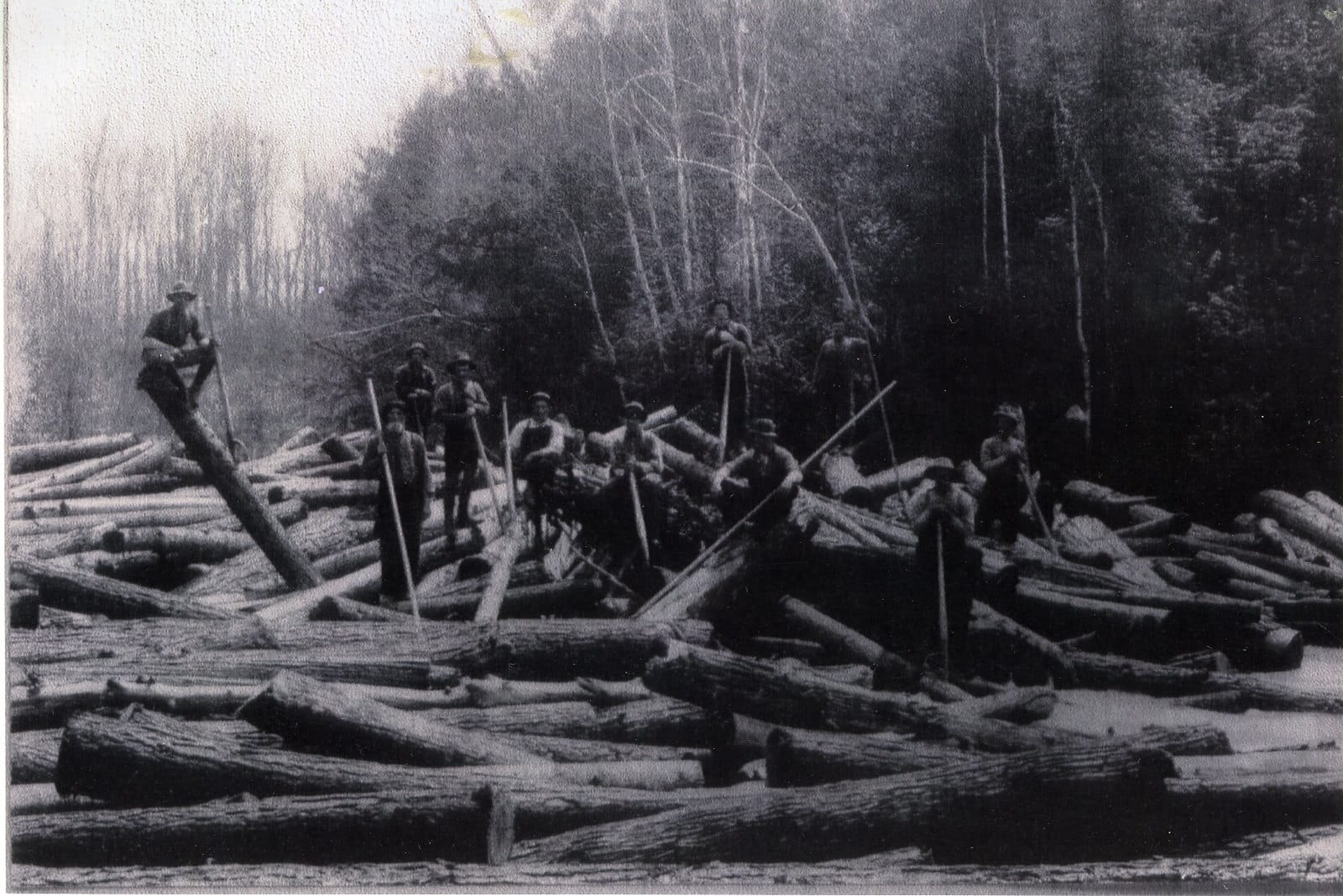
Clear-cut logging was prevalent during this early expansion with no formal management and little to no regard for practices that centered sustainability. A shift would only begin to take hold toward the end of this period.
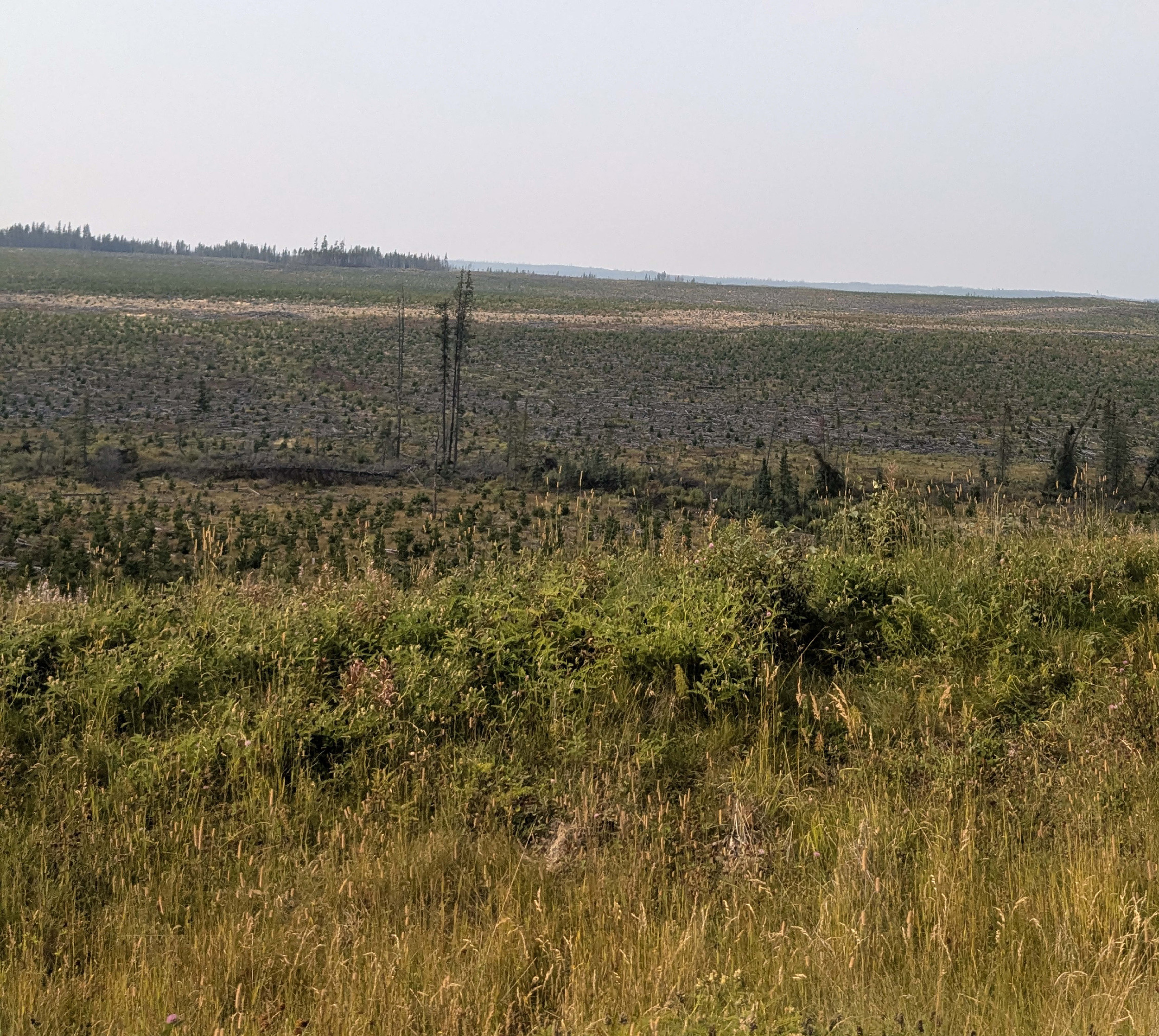
Recent harvest in Northeast Alberta, September 2025.
Modern-day Forestry in Alberta
Alberta assumed control of its forest resources from the federal government in 1930, changing the way that public forest areas were leased, and creating the systems that have ultimately evolved into the Forest Management Areas we have today.
Recognizing a need for sustainable forest management resulted in the implementation of more formal regulations and the practices such as forest inventorying, fire suppression, reforestation, and wildlife habitat management.

Take Action
Albertans for Coal Free Rockies
The basics of Alberta’s Forestry Management System
FMAs are 20-year, renewable, area-based forms of forest tenure. While other tenure types exist, such as licenses for timber volume, FMAs represent the most secure tenure type in Alberta.
The role of forestry management plans
Forest Management Plans (FMPs) are long-term (200 year) plans used to outline higher-level management objectives and spatial plans for a Forest Management Agreement area. They are usually updated every 10 years. While longer-term objectives are described in the FMPs, shorter-term goals, such as specific cut blocks, are covered in documents such as Annual Operating Plans and Forest Harvest Plans.
One company may retain rights to several FMUs, and several companies may have harvesting rights within single FMUs. All these details, as well as those around how many trees, and what species, can be harvested for a given time, are set out in Forest Management Plans (FMPs), which marks their importance.
Green and White Zones
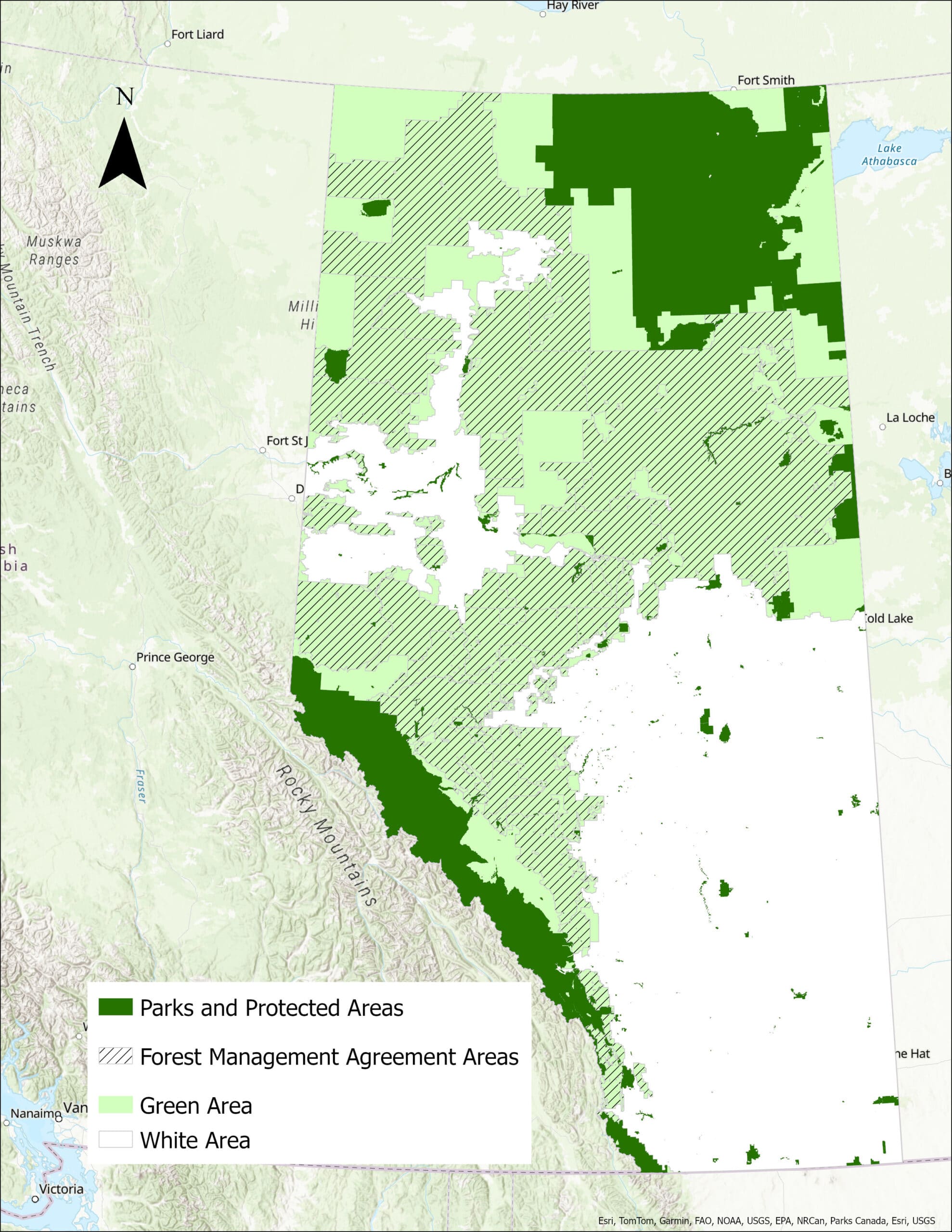
For administrative purposes, the province of Alberta is divided into two main zones: green and white. The white area is managed primarily for residential development and agriculture (25% of this area is public land).
The green area makes up the majority of the land area in the province, is predominantly public or “Crown” land, and includes all the forested regions of both Northern Alberta and the eastern slopes of the Rockies. These public lands are managed by the province (or in the case of National Parks, by the federal government), for the public good.
Indigenous Forest Stewardship
Though forests have only been “formally” managed in Alberta for about a century, the forests were not void of communities with their own management methods prior to industrial forestry practices. Indigenous Peoples have been shaping forested landscapes for millennia, and one example of their stewardship is cultural burns.
Indigenous forest stewardship in Canada is a vital aspect of the country's approach to environmental sustainability and reconciliation with Indigenous Peoples. It represents a blend of ancient wisdom and modern practices, aimed at ensuring that forests remain healthy and vibrant for generations to come.
Learn More
Alberta Forests
Forests cover approximately 60% of Alberta and are a key part of the province's landscape. Find out what makes Alberta's forests so important for healthy landscape, wildlife and communities.
Sustainable Forestry in Alberta
The forestry industry represents a small portion of Alberta’s GDP. The forestry industry, however, is integral to the livelihoods of many Albertans and undoubtedly, the way forests are managed will impact people living in Alberta, and Canada as a whole.
Forestry certifications
Forests are complex and diverse ecosystems, and unsustainable forestry practices threaten the persistence of intact forest landscapes. Sustainable forestry practices can be dictated through legislation and regulations or encouraged through programs like certification standards, which have been adopted by most of the companies operating in Alberta, however not all programs are created equal
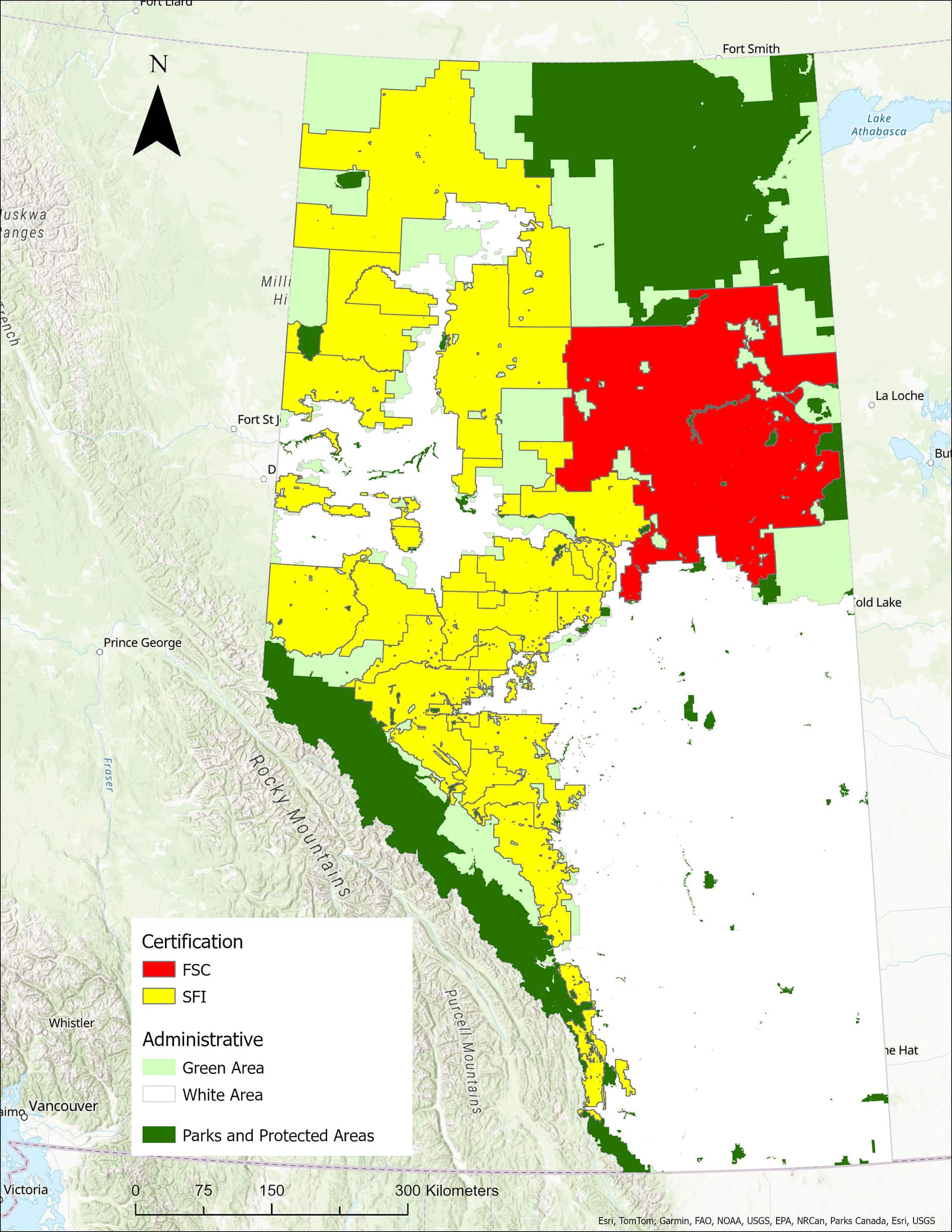
Two standards are used by forestry companies in Canada, the Forest Stewardship Council (FSC) certification and the Sustainable Forestry Initiative (SFI) certification. These standards are both meant to set high thresholds and comply with forest management laws and regulations, show customers they are buying products originating from sustainably managed forests, and issue certificates only after a thorough review by third-party auditors. In reality there are significant differences between the two standards.
How sustainable is Alberta's Forestry?
Unfortunately, in Alberta, the majority of forestry companies are only SFI-certified and therefore fall well short of any meaningful sustainability standards.A Path Forward
Alberta needs updated Forestry legislation that reflects both contemporary scientific knowledge and traditional Indigenous knowledge on sustainable forest management. With few meaningful updates or amendments since its creation in the early 1970s, Alberta’s Forests Act still reflects the values and objectives that prevailed in that era.
Make a donation
Move conservation forward in Alberta.
Lasting protection for nature and wildlife in Alberta doesn’t happen overnight (although we wish it did)! Your donation fuels our fight for nature. Donate to support CPAWS Northern Alberta’s conservation efforts.