
Don’t miss the email template you can send at the end of this page!
August 17th, 2026
Our largest national park is at risk of losing its international status as a World Heritage Site.
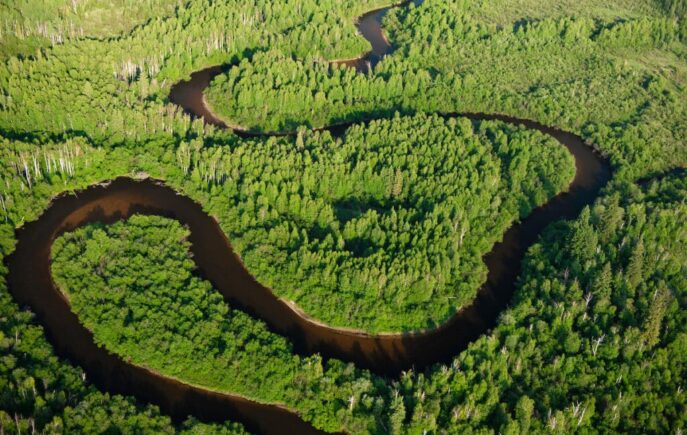
Wood Buffalo National Park, Canada’s largest national park and a UNESCO World Heritage Site, is an incredibly important place both ecologically and culturally.
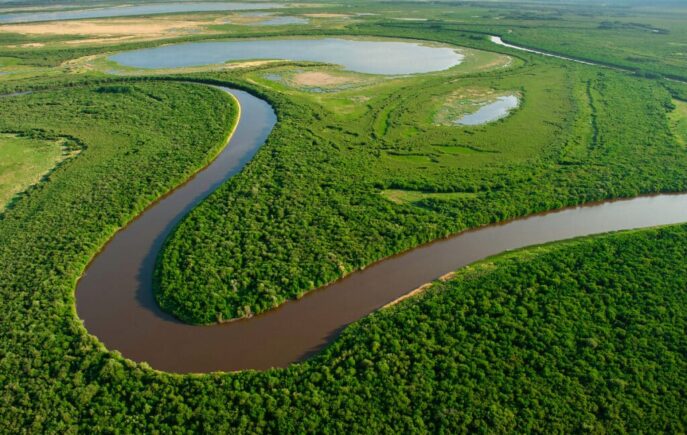
Wood Buffalo is celebrated for its Outstanding Universal Values (OUVs), including the largest Great Plains-Boreal Grassland ecosystem in North America. The Park also provides the last natural breeding habitat for the endangered whooping crane, and overlaps one of the largest inland deltas in the world. It is home to unique features such as salt plains and gypsum karst that together support a high concentration of migratory wildlife. Four of North America’s migratory bird flyways converge in the Park.
The Park, and the Peace-Athabasca Delta inside it, has been a life-giving place that supported Indigenous communities for millennia. Now, the Delta is on life support – with more frequent dry periods, a decline in biodiversity, changes to water quality, and more risks on the horizon, like climate change and growing oil sands mines.
Out of concern for the future of Wood Buffalo, Mikisew Cree First Nation led a petition to designate the Park as a World Heritage Site in Danger in 2014. In response, UNESCO sent a team to visit the Park in 2016 to assess the situation. One of the requirements following the visit was for Parks Canada prepare an Action Plan to address concerns and lay out commitments to conserving the OUVs. This Action Plan was submitted to UNESCO in 2019.
In 2022, UNESCO visited Wood Buffalo once again and confirmed the Park’s deteriorating condition had not improved, provided 17 management recommendations, and cautioned that the Park could be designated as a World Heritage Site in Danger without proper interventions.
What is happening at Wood Buffalo National Park right now?
The third international investigation led by delegates from UNESCO, called a Reactive Monitoring Mission, is taking place in Wood Buffalo National Park and surrounding areas from August 16–23, 2026. Over these eight days, representatives from the IUCN (International Union for the Conservation of Nature) and the World Heritage Committee will be visiting the region, and reassessing its threats and any progress made to improve conditions at the World Heritage Site.
In the years since the 2022 Reactive Monitoring Mission, Parks Canada has continued to progress on the Action Plan with collaboration and leadership from several Indigenous communities in the region. Earlier this year, the federal government announced a $90 million investment into the recovery of the Park. However, threats to the Park continue to mount and a portion of the 137 Actions and 17 recommendations remain outstanding. Recovering the Park and securing its future will take cooperation and collaboration across all governments and communities.
With environmental safeguards being removed and growing pressure from Alberta and Canada to build new industrial infrastructure and double oil and gas production upstream of the Park, your voice is needed. You can speak up for Wood Buffalo by writing to the federal and provincial Environment Ministers and letting them know you care about the future of Wood Buffalo National Park.
Send an email now
Not sure what to say to our ministers? We have crafted a template you can copy or use for inspiration.
Send to:
- The Honourable Julie Dabrusin, Minister of the Environment, Climate Change and Nature
- Grant Hunter, Minister of Environment and Protected Areas
CC us:
- CPAWS Northern Alberta
Dear Minister Dabrusin and Minister Hunter,
I am writing to express my support for taking strong action to improve conditions in Wood Buffalo National Park. The Park is an incredibly important part of Alberta, and Canada, and should be a priority to ensure the threats it faces are urgently addressed.
I applaud the federal government for making a large investment into the Park as part of the A Force of Nature strategy. However, that money will only go so far to mitigate rising threats such as climate change and growing oil sands mines upstream.
With the UNESCO Reactive Monitoring Mission visiting Wood Buffalo this week to conduct an investigation into the state of the region, and potentially list the site as a World Heritage Site In Danger, we hope to see cross-government collaboration to ensure the best future for the Park, the people, and the lands and waters it encompasses.
As my provincial and federal environment Ministers, I urge you to:
- Improve communication, transparency and co-governance with Indigenous partners.
- Implement a moratorium on new dams on the Peace River until impact evaluation tools are in place and hydrological impacts are fully understood – a clear recommendation of the 2022 Reactive Monitoring Mission.
- Action an immediate tailings risk assessment and science-based action to address the tailings crisis.
- Ensure the outstanding pieces of the Action Plan are implemented in a timely manner with the most urgent matters being addressed first, such as those listed above.
- Assess how recent changes to regulations, such as the Building Canada Act and Alberta’s mandate to double oil and gas production, may impact the Park and ensure that additional negative impacts are avoided.
Thank you for your time and attention to this matter.
Sincerely,
[Your Name]
For a more detailed timeline of events relating to the conservation of Wood Buffalo National Park, please visit our webpage here.
For further information, please contact:
Kaitlyn Philip, Boreal Program Manager, CPAWS Northern Alberta
Make a donation
Move conservation forward in Alberta.
Lasting protection for nature and wildlife in Alberta doesn’t happen overnight (although we wish it did)! Your donation fuels our fight for nature. Donate to support CPAWS Northern Alberta’s conservation efforts.
Donate